Seven Ways to Improve Your Relationship

Valentine’s Day is around the corner. What are you doing for your loved one? Here are some tips from Psychotherapist and Life Coach, Valerie Smith .  If you and your partner can follow these 7 steps, everyday would become Valentine’s.

1. TAKE RESPONSIBILITY FOR YOURSELF
This is the most important choice you can make to improve your relationship. This means that you learn how to take responsibility for your own feelings and needs. This means that instead of trying to get your partner to make you feel happy and secure, you learn how to do this for yourself through your own thoughts and actions. This means learning to treat yourself with kindness, caring, compassion, and acceptance instead of self-judgment. Self-judgment will always make you feel unhappy and insecure, no matter how wonderfully your partner is treating you.

For example, instead of getting angry at your partner for your feelings of abandonment when he or she is late, preoccupied and not listening to you, not turned on sexually, and so on, you would explore your own feelings of abandonment and discover how you might be abandoning yourself.
When you learn how to take full, 100% responsibility for yourself, then you stop blaming yrelationshipour partner for your upsets. Since blaming one’s partner for one’s own unhappiness is the number one cause of relationship problems, learning how to take loving care of yourself is vital to a good relationship.

2. KINDNESS, COMPASSION, ACCEPTANCE
Treat others the way you want to be treated. This is the essence of a truly spiritual life. We all yearn to be treated lovingly – with kindness, compassion, understanding, and acceptance. We need to treat ourselves this way, and we need to treat our partner and others this way. Relationships flourish when both people treat each other with kindness. While there are no guarantees, often treating another with kindness brings kindness in return. If your partner is consistently angry, judgmental, uncaring and unkind, then you need to focus on what would be loving to yourself rather than reverting to anger, blame, judgment, withdrawal, resistance, or compliance. Kindness to others does not mean sacrificing yourself. Always remember that taking responsibility for yourself rather than blaming others is the most important thing you can do. If you are consistently kind to yourself and your partner, and your partner is consistently angry, blaming, withdrawn and unavailable, then you either have to accept a distant relationship, or you need to leave the relationship. You cannot make your partner change – you can only change yourself.

3. LEARNING INSTEAD OF CONTROLLING
When conflict occurs, you always have two choices regarding how to handle the conflict: you can open to learning about yourself and your partner and discover the deeper issues of the conflict, or you can try to win, or at least not lose, through some form of controlling behavior. We’ve all learning many overt and subtle ways of trying to control others into behaving the way we want: anger, blame, judgment, niceness, compliance, caretaking, resistance, withdrawal of love, explaining, teaching, defending, lying, denying, and so on. All the ways we try to control create even more conflict. Remembering to learn instead of control is a vital part of improving your relationship.
For example, most people have two major fears that become activated in relationships: the fear of abandonment – of losing the other – and the fear of engulfment – of losing oneself. When these fears get activated, most people immediately protect themselves against these fears with their controlling behavior. But if you chose to learn about your fears instead of attempt to control your partner, your fear would eventually heal. This is how we grow emotionally and spiritually – by learning instead of controlling.

4. CREATE DATE TIMES
When people first fall in love, they make time for each other. Then, especially after getting married, they get busy. Relationships need time to thrive. It is vitally important to set aside specific times to be together – to talk, play, make love. Intimacy cannot be maintained without time together.

5. GRATITUDE INSTEAD OF COMPLAINTS
Positive energy flows between two people when there is an “attitude of gratitude.” Constant complaints creates a heavy, negative energy, which is not fun to be around. Practice being grateful for what you have rather than focusing on what you don’t have. Complaints create stress, while gratitude creates inner peace, so gratitude creates not only emotional and relationship health, but physical health as well.

6. FUN AND PLAY
We all know that “work without play makes Jack a dull boy.” Work without play makes for dull relationships as well. Relationships flourish when people laugh together, play together, and when humor is a part of everyday life. Stop taking everything so seriously and learn to see the funny side of life. Intimacy flourishes when there is lightness of being, not when everything is heavy.

7. SERVICE
A wonderful way of creating intimacy is to do service projects together. Giving to others fills the heart and creates deep satisfaction in the soul. Doing service moves you out of yourself and your own problems and supports a broader, more spiritual view of life.

If you and your partner agree to these 7 choices, you will be amazed at the improvement in your relationship!

Valerie Smith is a Psychotherapist, Life Coach and Certified Clinical Hypnotherapist. She is member of the Canadian Examining Board of Health Care Practitioners (CEBHCP), graduate of Transformational Art College in Toronto and a Certified Practitioner of Percussive Suggestion Therapy Level 1 (PSTEC) and Advanced PSTEC Corporate and Business Consultant for corporate advice and consultation for stress, employee welfare, and employee performance. Valerie is a member of the International Association of Past Life Therapists (IAPLT) and a Reiki Master.

Posted in Mental Health, Uncategorized | Tagged , , , , , | Leave a comment

Depression Linked to Zinc

According to a recent study, people who are depressed have lower concentrations of zinc in their peripheral blood compared with nondepressed people.

This is actually promising news, as it suggests that something as simple as zinc supplements might help depressed people with their symptoms.

Early clinical trials suggest that adding zinc to antidepressant therapy may produce more rapid and effective relief from depressive symptoms.

“The pathophysiological relationships between zinc status and depression, and the potential benefits of zinc supplementation in depressed patients, warrant further investigation,” write Walter Swardfager, PhD, from the Sunnybrook Research Institute, University of Toronto, Canada, and colleagues.

Zinc,DCF 1.0 an antioxidant, and can also:

  • Improve immunity
  • Prevent Cancer
  • Improve strength
  • Improve male and female reproductive health and fertility
  • Prevent Diabetes
  • Prevent Alzheimer’s

Supplements and foods that could help increase zinc levels in an individual’s blood include:

Oysters      Sesame seeds      Pumpkin seeds
Squash seeds    Mushrooms    Dark chocolate
Fresh fruits   Beans    Brown Rice   Tahini    Garlic
Spinach   Oats     Miso

Posted in Mental Health, Uncategorized | Tagged , , , | Leave a comment

Probiotics and Autism

AutismA recent study shows that probiotics may have benefit people suffering the Autism Spectrum Disorder (ASD).

According to this new research, treatment with a certain human gut microbe, Bacteroides fragilis, alleviated ASD-like behaviours and eased accompanying gastrointestinal (GI) symptoms in a mouse model of autism.

“Traditional research has studied autism as a genetic disorder and a disorder of the brain, but our work shows that gut bacteria may contribute to ASD-like symptoms in ways that were previously unappreciated,” study investigator Sarkis K. Mazmanian, PhD, said in a statement.

For the study, the investigators explored gut-microbiome-brain interactions in ASD in animal model. Research discovered that offspring of animal models had defects in intestinal integrity similar to those reported in some individuals with ASD.

They also found that oral treatment of in the animal model was effective in treating symptoms of inflammatory bowel disease and multiple sclerosis. That same treatment also corrected intestinal permeability or ‘leaky gut’, thereby reducing the levels of behaviour-altering microbes that find their way into the metabolic system. In the current study,  research colleagues propose that autism, and likely other behavioral conditions, are potentially diseases involving the gut that ultimately impact the immune, metabolic, and nervous systems and that microbiome-mediated therapies may be a safe and effective treatment for these neurodevelopmental disorders.

This report is the first known report of an animal research model for autism that took gastrointestinal  dysfunction into account. Published Dec 2013.

Posted in Mental Health | Tagged , , , , , , | Leave a comment

Healthy Baking for Christmas

As a health practitioner, I am always on a look out for healthy tips for patients, especially during the holiday season.  Here are some amazing tips provided by Christy Heath, the founder of HEALTHY HEATH.

By Christy Heath

Within the last two years I developed sensitivities to dairy, bakers yeast and sugar cane.  I have always loved to bake and have always enjoyed the baking that I do.  Not being able to eat dairy and sugar cane put a hitch in my ability to make all the treats I enjoyed.  So, I started to look at alternative ingredients that would allow me to still create great tasting, even decadent goodies that I could enjoy.

The key to making healthy substitutes in baking is to experiment with quantities, consistencies, and flavors until you find what works for you, with a touch of google research to pull it together. Here are some of the substitutes that I use:

Sugar: I had begun years ago using alternatives to refined sugar. I started with puréed dates, concentrated fruit juice, maple syrup and honey.  Through lots of trial and error I found recipes with which each of these worked well. In general I have found the best alternative for baking to be coconut palm sugar (made from coconut tree nectar), which can be used like brown sugar and has a very low glycemic index.   When a recipe does need a “white” sugar, I choose xylitol (made from tree, fruit and plant fibers). These are my personal preferences because both use a 1:1 ratio to brown or white sugar.

butter, sugar, egg, flour, baking powder, choc...


Butter or Fats: Substitutes that I use for butter vary depending on what I am making.  Vegan margarine works well if you are just trying to cut dairy, but avoid palm kernel oil.  Safflower or sunflower oil are good.  Coconut oil is a fantastic substitute and it adds extra tropical flavor.

Milk, Cream and Yogurt: There are so many alternatives available to substitute milk in a recipe.  Rice milk, almond milk, coconut milk, and flax milk can all be used. Depending on the recipe, you can even use juice (apple is the most versatile) or water.  I like coconut cream the best substitute for cream and yogurt. You can buy coconut cream and mix it with water (mix it thick). Or you can refrigerate a can of coconut milk for about 6 hours and skim the cream off the top.  This refrigerated coconut cream can be used to make a whipped cream.

Flour: I use unbleached instead of white flour.  I also use whole wheat flour whenever possible.  If you are using a premixed gluten free pancake mix, make sure you find one with low sodium.  I have recently tried coconut flour. It is gluten free and is also suitable for those on a paleo diet.  The amount of coconut flour should be reduced. For example, I use 3/4 cup of coconut flour for 1 cup of regular flour. You would need to use more eggs to maintain the needed consistency when using coconut flour.

Eggs: If you want to make your recipes vegan you need to substitute the eggs as well.  There are a few things that work well but they all depend on the recipe you are making. So experimentation is necessary.  Applesauce can be used in soft baked goods like muffins, pancakes or cakes (1/2 cup applesauce = 1 egg).  Bananas can also be used.  These work well in muffins, brownies and cookies ( 1/2 a banana = 1 egg).  The most versatile substitute is ground flax seed ( 1 one tbs of ground flax seed = 1 egg).  Boil one tbs of ground flax seed w

ith three tbs of water, remove from heat and let it form into a gel.

The real key is trial and error, and willingness to test out your recipes. Then make sure you write down the ones that work. He

re is a recipe for Gingerbread Cookies that are gluten free and can be made paleo by using coconut oil and vegan by using flax instead of egg:

Ingredients:Ginger bread Cookie

  • 1/2  cup vegan margarine or coconut oil melted
  • 1/2 cup coconut palm sugar
  • 1/2 cup molasses
  • 3 eggs or 3 tbs ground flax seed boiled with 9 tbs of water
  • 1.5 cups coconut flour
  • 1 tsp baking soda
  • 1/2 tsp baking powder
  • 1/2 tsp ground ginger

Cream together the margarine or coconut oil, sugar and molasses; beat in the eggs or flax.  Sift together the dry ingredients and gradually mix with molasses mixture.  Roll out on lightly floured surface and cut with cookie cutters.  Bake at 350 for 10-15 minutes depending on the size of the cookies.  These cookies don’t have the lifespan of traditional gingerbread so eat them within a day or two.

Posted in Recipes, Uncategorized | Tagged , , , , , | Leave a comment

Healthy Eating in middle age… healthier aging in later age

Sardines Marinades amb verduretes

Sardines Marinades amb verduretes (Photo credit: Spanish Recipes)

Various studies have shown that a healthy Mediterranean diet may contribute to reduced fasting glucose concentrations and lipid levels in those at risk for diabetes, may lower the risk for cardiovascular events and stroke, and improve cognition. A new study involving 10,670 female nurses, published in the November 5 issue of Annals of Internal Medicine, indicates that middle-aged women following a healthy Mediterranean-type diet — with an emphasis on fruits, vegetables, whole grains and fish, moderate amounts of alcohol, and little red meat — have much greater chance of healthy aging later on.

“In this study, women with healthier dietary patterns at midlife were 40% more likely to survive to age 70 or over free of major chronic diseases and with no impairment in physical function, cognition or mental health,” said lead study author, Cécilia Samieri, PhD, Institut pour la Santé Publique et le Developpement, Université Bordeaux, France. (read more)

Posted in General Health | Tagged , , , , | Leave a comment

Quinoa is not a grain. It’s a seed!

Quinoa (Chenopodium quinoa) dans le jardin bot...

Quinoa (Chenopodium quinoa) dans le jardin botanique Henri-Gaussen, Toulouse, France (Photo credit: Wikipedia

by Julie Daniluk

Quinoa has become one of the most popular nutritional superstars of the decade. And with good reason! This small seed has an amazing nutty taste, is incredibly versatile, easy to prepare, high in nutrients and a complete vegetarian protein. Unfortunately the popularity of this food has lead to the time old problem of supply, demand and price. Not unlike other worldwide popular foods such as coffee and chocolate, quinoa has been traditionally grown in one specific region of the world. The increased demand has created a new and challenging environment for quinoa farmers. (read more)


Quinoa recipe

Posted in Nutrition | Tagged , , | Leave a comment

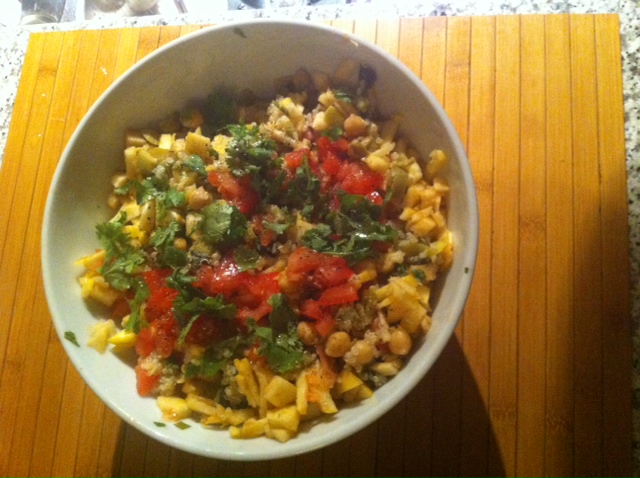
Quinoa apple salad


  • This is a fantastic recipe. Easy to make. Enjoy it. Quinoa apple saladQuinoa cooked with leek
  • Golden Delicious Apple (finely chopped)
  • Tomato (finely chopped)
  • cilantro
  • a can of chickpea
  • green olives (finely chopped)
  • you can add other fruits as well, such as peach
  • Lastly, add a little oil. Olive oil or hemp oil.
Posted in Recipes | Tagged , , , , | Leave a comment

Osteoarthritis Patients Now Twice as Likely to Survive Hip Replacement Surgery

English: Hip replacement using cementless impl...

English: Hip replacement using cementless implants. 16 days post-surgery. (Photo credit: Wikipedia)

A recent study has revealed that osteoarthritis patients  undergoing total hip replacement surgery are now twice as likely to survive within 90 days of surgery.

The study, published in The Lancet (September 2013) involved more than 400,000 cases who underwent hip replacement for osteoarthritis between April 2003 and December 2011 in Wales and England. Researchers identified 1,743 deaths: a 90-day mortality rate that fell from 0.56% in 2003 to 0.29% in 2011.

Several clinical factors were associated with lower mortality after adjusting for sex, age group, and comorbidity, including:

    • The method of surgical approach
    • Specific treatments to stop blood clots after surgery
    • Pre-surgical fitness
    • Post surgical Rehab
    • Spinal anesthetic

In addition, the researchers found that the type of prosthesis showed no association with mortality. However, poor health was associated with a significant increased risk of death.

  • Moderate or severe liver disease associated with a nearly 10-fold greater risk for 90-day mortality
  • Metastatic cancer was associated with 7-fold increased mortality
  • Heart Attack, congestive heart failure, and diabetes were all associated with 2 and 3 times increased mortality
Posted in Orthopaedics, Uncategorized | Tagged , , , , , , , | Leave a comment

Acupuncture for Recurring Depression

Depression

Depression (Photo credit: Wikipedia)

It is estimated that 1 in 20 Canadians report some form of depression every year, which makes it Canada’s fastest-rising diagnosis.  In the United Kingdom, it is the third most common reason for primary care consultation, meanwhile up to 60% of patients have an inadequate response to antidepressants, and 30% do not adhere to their medication regimen. Therefore it becomes important to explore nonpharmacologic treatment options. Although acupuncture is frequently used for the treatment of depression by acupuncturists, it is rarely used in mainstream medicine.

A randomized controlled trial of acupuncture and counseling showed that both treatments demonstrated a statistically significant symptom reduction at 3 months. This study involved 755 patients with recurring bouts of moderate to severe depression.

“To our knowledge, our study is the first to rigorously evaluate the clinical and economic impact of acupuncture and counselling for patients in primary care who are representative of those who continue to experience depression in primary care,” the authors write.

A cost-effectiveness analysis of the treatments was also conducted, the results of which will be published in a separate article.

Published online September 24, 2013. Full article

Posted in Mental Health | Tagged , , , , | Leave a comment

10 Ways to Protect Your Child’s Spine From Heavy School Backpacks

Every fall, I get asked by concerned parents about how school bags can affect their children’s spines. Research clearly shows that there is an association between heavy backpacks and risk of back pain in children. A study involving 1,403 school children between the age of 12-17 showed that those carrying the heaviest backpacks had a 50% higher risk of back pain. Other  studies have highlighted the risks of heavier backpacks, English: Outdoor backpack Deutsch: Outdoor-Ruc...especially when weights exceed 20% of the child’s body weight. Another Australian study confirmed that neck pain among adolescents is as common as back pain. Children assume a compensatory forward head posture under backpack loads greater than 10-15% of their body weight. A poorly worn backpack can change posture and gait when walking, which will set a weak foundation for the body frame. It has been shown that adolescents diagnosed with back pain are much more likely to have chronic back pain and injuries as adults.

Here are some uniquely designed backpack

  • by IVAR, which uses a Shelf System design.

So here are 10 practical tips for preventing back pain from carrying schoolbags:

  1. Reduce the weight to 10-15% of the child’s body weight
  2. Reduce the duration of time wearing the backpack
  3. Place heavy items so that they are closest to the child’s back and make sure they can’t move around (or one with shelf system design)
  4. The bags should have wide, padded and adjustable shoulder strapsback_pack_safety_t580
  5. Lightweight design is ideal
  6. Use the compression straps at the sides of the bag to bring the load together
  7. Use the waist strap and chest strap to bring the load closer to child’s back
  8. Backpacks should not be wider or longer than the child’s torso (maybe adjustable)
  9. Don’t carry the backpack low on the back
  10. Show your child the correct way to put on the backpack and wear it properly


Posted in Pediatrics | Tagged , , , , , , , , , , | 1 Comment