
Sugar, Salt and Hypertension

Toronto has an enviable supply of ‘ethnic’ restaurants. I visited a Tibetan one about a few years ago. When I met the owner, he offered me a traditional Tibetan tea. After the first mouthful, I exclaimed, “Wow! Now that’s salty!” A long conversation about salt, tea and hypertension followed.sugar and salt

“How can this be good for the heart and hypertension?” I knew that many, if not all, Western physicians are as confused about that as I am. But I finished the whole cup, knowing that Tibetans have been drinking it that way – salt included – for centuries.

blood pressureFrom the Western point of view, too much salt in the diet leads to hypertension. In fact, Western physicians very strongly urge their hypertensive patients to reduce salt. This urging has resulted in some patients obediently going to great lengths to maintain a salt-free diet. Cutting out that extra spoonful of salt is probably a good idea, but it should be noted that a recently published review article suggests that sugar, not salt, is the culprit. It appears that sugar is likely the major contributor to most of the hypertension risk that translate into one or more of the cardiometabolic ‘diseases’ (diabetes, heart attack, stroke).

Richard Krasuski, MD, from the Cleveland Clinic in Ohio states that “It is a little bit frightening that we have been focusing on salt for so long”. Dr Krasuski said  “The conclusion that sugar represents a greater danger to the heart than salt was an “eye opener”.  He also acknowledged that he should have anticipated it. He and other cardiologists have noticed that the recommendations to increasingly lower salt intake have not resulted in the expected positive cardiovascular outcomes.

James J. DiNicolantanio, PharmD, from Saint Luke’s Mid America Heart Institute in Kansas City, Missouri, and Sean C. Lucan, MD, MPH, from Albert Einstein College of Medicine in Bronx, New York, detailed those findings in a review of epidemiological and experimental studies in Open Heart:

  • Consuming 25% or more calories from added sugar, increases three-fold the risk of death due to cardiovascular disease.
  • Drinking sugar-sweetened beverages has been DIRECTLY associated with heightened blood pressure.
  • Estimated individual annual sugar intake rates in the U.S. range from 77 to 152 lbs.
  • Replacing processed foods by natural whole foods is desirable.
  • High-sugar diets may make a significant contribution to cardiometabolic risk.
Posted in Cardiovascular Health, Heart Health | Tagged , , , | 1 Comment

The secret to looking good in skinny jeans

You wake up one morning feeling great and you just want to look as amazing as you feel.  Going through your wardrobe, you spot a beautiful pair of pants (skinny jeans perhaps!) that you haven’t worn in 6 months, you put them on and… you can’t button them up.  Somehow, 2 inches of fat have sneaked up between you and these gorgeous pants that once flattered your body.

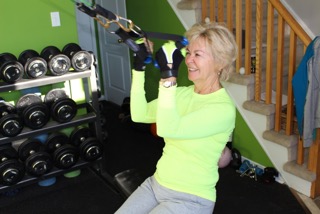
This scenario has happened to almost all of us, unfortunately probably more than once.  Losing weight is always at the top of the list for New Year’s resolutions and maybe you were amongst those that swore that this year, they would improve their body composition. Now, a few months later, how is that resolution going?  Possibly… not as well as planned.  We know that to lose fat we need to exercise, eat healthy and get proper amounts of sleep.  However, we rarely talk about the mental aspect.  From my personal experience and while working with clients as a personal trainer, I have come to learn that the psychological aspect is the principal reason in determining your success or failure when it comes to your fitness goals.

Why does why matter?

You say “I want to lose 10 pounds”, but really you don’t.  Dig deeper, why 10 pounds? Is it so you can fit comfortably in your clothes, have more energy, be able to play with your grandkids?  Truth is, it is not 10 pounds that you want to lose, it is what that 10 pounds represents to you.  Once you have determined your real reason(s), focus on why you want to achieve that goal.  The more whys, the more meaningful they are, the easier it will be to stay strong in moments of weakness.  Really commit to your whys by writing them down.

You are smarter than you think!

Anthony Robbins says “ask dumb questions and you will get dumb answers”.  If you ask, why am I so fat?  Your brain will give you an answer.  Instead, focus your energy on smarter questions.  How can I make exercising fun in order to look forward to my workouts?  What strategies can I implement that will allow me to make healthier food choices?  Think of smart questions and I guarantee that your brain will find an answer.

2015-02-06 09.56.24The power of Internal talk

I’ve tried everything.  I just can’t lose weight. You’ve probably heard those statements before, maybe even used them or at least thought them yourself.  And if you’ve said them, what did your brain tell you?  “YOUR RIGHT!”, you’ve tried everything.” “You can’t lose weight, it’s too hard”.  We all can imagine what happens next.  We go back to our old ways.  Back to that comfort zone.  Success leaves cues.  Look at the area of your life that you have succeeded in.  What did you tell yourself?  What did you say when times were tough? If you can’t think of a past experience, make a mantra.  A mantra is a statement that you repeat frequently.  Think of a sentence that will help you keep moving forward.  Have fun with it.

When it comes to fitness, we often overestimate what we can do in 1 or 2 months and underestimate what can be accomplished in 12-18 months.  Determine why you want to make the change and what it means to you.  Ask smart questions that will lead you towards your goal and formulate a mantra that you will repeat everyday.  Armed with these tools, you can now improve your diet, exercise and give your body appropriate rest in order to achieve the physique that you desire.  After all, health and fitness is a journey.  You might as well enjoy the process.

Guy DufourGuy Dufour. Coach Guy Dufour is the founder of Corefit Training.  Has a master athlete in functional movement competitions, Coach Guy understands the adaptations required to remain active as we age.  He focuses on helping men and women to find their inner athlete and become stronger to enjoy a higher quality of life as we get older.  Coach Guy can be reach through his website www.corefittraining.ca


Posted in General Health | Tagged , , , | Leave a comment

Sunshine Vitamin Improves Stroke Outcome

A new study shows that low vitamin D (25-OH-D) levels are associated with larger brain stroke and vit D“infarct” volume in patients with “ischemic” stroke.  Both words really describe the same basic condition, which is that the brain is being deprived of oxygen. The details of that study were presented at the 2015 International Stroke Conference in Tennessee.

Key highlights:

  • Patients with vitamin D levels below 30 ng/ml had “infarct volume two-fold larger than those with normal levels. In other words, more likely to suffer severe strokes.
  • At three months, a higher risk for functional dependence. In other word, less likely to have a healthy recovery after 3 months.
  • Population-based studies have shown a direct link between low vitamin D and strokes, and have shown that the vitamin can also modify a stroke’s severity. Vitamin D affects stroke risk factors and the outcome of the stroke.
  • The subjects of the recent research studies were patients who had “acute ischemic strokes” from January 2013 to January 2014. Their median age was 73 years, and 45% were women.

Many factors that can cause stroke. Although a firm cause-and-effect relationship between vit D and strokes is not established, it remains clear that Vit D level can influence the outcome of the stroke.

Prior studies have shown that low vitamin D levels increase cardiovascular risk, double the risk of stroke in women, and increase the risk of poststroke hip fractures.

More recently, low vitamin D levels in children have been associated with subclinical atherosclerosis in adults. “A priori, it makes intuitive sense to maintain adequate vitamin D levels in these patients,” Dr. Jose Biller, professor and chair of neurology at the Loyola University Chicago Stritch School of Medicine, Illinois, concluded.

Does this mean everyone should start taking Vitamin D supplement? I often recommend Vitamin D to patients, as it also benefits children with asthma and patients with back pain. However, I also recommend patients to find out their vitamin D level through blood test in order to determine how much vitamin D would be appropriate for them.

Posted in Cardiovascular Health, Vitamin D | Tagged , , , , , | Leave a comment

Natural Remedy for High Altitude Sickness

IMG_3042If mountain climbing is not your thing, you may never have reason to fear catching High Altitude Sickness. However, even at a relatively low level of altitude above your norm, your body may find it difficult to operate with a thinner supply of oxygen than it’s used to. The result can be the above-noted sickness and its companion Traveler’s Diarrhea. This was on my mind when I OLYMPUS DIGITAL CAMERAjoined a group this past December, to travel to Nepal to take a mild climb up to the famous Mount Everest Base Camp.

Before we began our climb, our group was outfitted not only with suitable clothing, but also with medications to alleviate any discomfort we might feel at a high altitude. Quite simply, if we humans venture up to the unaccustomed level of 2400 metres or so, our system needs to acclimatize itself. One way is to cut the journey into easy steps of 500 or so meters, with a good rest between each step.

IMG_3089The symptoms of High Altitude Sickness are less obvious. Common symptoms include headache, loss of appetite and trouble sleeping. It feels like a hangover. More severe symptoms may include vomiting and dizziness, feeling confused, an inability to walk straight and having blue or gray fingernails and lips. It also turns out that your physical fitness has no bearing upon your ability or inability to fall victim to the sickness.

However, as we flew from the capital city of Kathmandu to Lukla, a guide gave us a tip as to how we could avoid being ill – we should eat a lot of garlic. Garlic thins the blood and improves blood flow.  IMG_3079So, I stuffed myself with garlic nearly every meal. The trip to the Everest Base Camp took about eight days. I am happy to report that I didn’t suffer any discomfort from high altitude sickness. Perhaps the garlic did its job.


By the way, if you and garlic are not friends, ginkgo biloba, ginger, proper hydration, avoiding alcohol and eating digestible meals apparently also help.

You can learn more about Altitude Sickness at the International Society for Mountain Medicine at www.ISAMandED.org

Posted in Nutrition | Tagged , , , , , , | Leave a comment

Ergonomics Tips: Desktop, Mobile, and Laptop

Changes in technologies over the decade also lead to changes in ergonomic related injuries: from the traditional carpel tunnel syndrome and neck pain to the “Blackberry” thumb and increasingly frequent eye strain.

Here are some of my favourite videos on ergonomic tips which I recommend to my patients:

Laptop ergonomics on the gofile0001032337095

Laptop ergonomics at home – child and adult

Laptop ergonomics at home 2

Office ergonomics 

Smartphone ergonomics

Posted in Musculoskeletal, Uncategorized | Tagged , , , , | Leave a comment

Antibiotics linked to Child Obesity

Children who take repeated antibiotics are more likely to become obese by the age of 5, according to a new study, published on September 29 2014 in JAMA Pediatrics.

The study examined the health records of nearly 65000 children found that nearly 70% IMG_0177were exposed to antibiotics during the first 24 months of life. Children exposed to 4 or more doses of broad-spectrum antibiotic had the highest risk (16% increased) of obesity. This is not the first study of its kind. The association between broad-spectrum antibiotics and obesity is consistent with another study published in 2013.

The first 24 months represent a period of major shift in growth and eating habits, as well as the establishment of the gut microbiome. At this age, antibiotics are often prescribed for ear infections, bronchitis and other common ailments.

“Many scientists are now concerned that exposure to antibiotics – from medication, food or even tap water – has the potential to kill off some of the beneficial bacteria that may protect people from chronic disease” said Dr. Bailey, MD, PhD, from the Department of Pediatrics, Children’s Hospital of Philadelphia. Beneficial bacteria helps to breakdown and absorb certain nutrients into our body. If this ecosystem of microbiome is negatively impacted, it would affect our health poorly.

“While antibiotics can be lifesaving, doctors sometimes use them too freely. For example, 40% of women receive antibiotics during labor. Doctors often consider only the benefits of antibiotics, but not their risks, said Martin Blaser, MD, chairman of the Department of Medicine at the New York university.

The study suggests that whenever possible, narrow-spectrum antibiotic should be prescribed over broad-spectrum. Early use of antibiotics is not the only issue. Changes in modern life — from processed food and preservatives to increasing rate of C-sections — are also altering these microbiome.

If the child ends up using antibiotics, probiotics for infant and children can be used to replenish these microbiome.

Posted in Pediatrics | Tagged , , , , , | Leave a comment

Leg pain? It may be back-related.

“Doc! My leg is hurting me, but my back is ok. Can you help?” I hear this frequently in my practice. Many leg pain can actually be originated from the back with or without experiencing back pain. A proper examination will help to determine whether your leg pain is related to the back.

A recent study published in the Annals of Internal Medicine, September 2014, showed that patients with back-related leg pain (BRLP) experienced greater improvement with spinal manipulative therapy (SMT) plus home exercise and advice than home exercise and advice alone.

Man Have Pain In Leg, Thigh "Image courtesy of Marin at FreeDigitalPhotos.net"

Man Have Pain In Leg, Thigh “Image courtesy of Marin at FreeDigitalPhotos.net”

“Most patients with BRLP are treated with prescription medications and injections, although little to no evidence supports their use,” the authors write. “Surgical approaches are also commonly applied, although there is only some evidence for short-term effectiveness compared with less invasive treatments.” Clinicians are increasingly recommending SMT, exercise, and education.

The study compared 12 weeks and 52 weeks effects of SMT plus home exercise and advice with home exercise and advice alone in 192 patients with BRLP. Patients in the home exercise and advice group received 4 hour-long sessions of home exercise and advice — designed to help them manage existing pain, prevent pain recurrences, and increase their engagement in daily activities — over the course of 12 weeks. Patients in the SMT plus home exercise and advice group received the same intervention as well as up to 20 sessions of spinal manipulation therapy by a chiropractor.

SMT plus home exercise and advice group home exercise and advice alone
Reduction in leg pain at 12 weeks 37% of patients experience 75% reduction in leg pain 19% of patients
Complete Pain Relieve at 12 weeks 20% of patients 5% of patients
Medication at 12 weeks 44% reduction 37% reduction

At 52 weeks, the SMT plus home exercise and advice group experienced more improvement than the home exercise and advice group in global improvement, satisfaction, and medication use only.

For patients with subacute and chronic BRLP, SMT in addition to home exercise and advice is a safe and effective treatment approach, resulting in better outcomes than home exercise and advice alone.


Posted in Musculoskeletal, Orthopaedics, Spine Health | Tagged , , , , , | Leave a comment

Spine Surgery Patients Need Adequate Vitamin D Levels

From time to time, patients may decide to go for surgery for their musculosketal conditions when they have exhausted all conservative methods. They would say to me, “I can’t really do much because I am in so much pain. I can’t do the exercises that are prescribed to me. What else can I do to improve my outcome?”. My answer would be “Check your vitamin D”.

A recent study found that 65% of patients undergoing spinal fusion had vitamin D inadequacy (<32 ng/mL), which can delay recovery. Spine-related disability is higher in patients with low levels of vitamin D.

Dr. Jacob M. Buchowski, MD, and orthopedic surgeons at Washington University School of Medicine suggested that it is reasonable to screen patients scheduled for surgery for vitamin D levels, and those with a documented deficiency should be given vitamin D supplements. Dr. Buchowski and his colleagues at Barnes-Jewish Hospital now routinely screen all patients undergoing spinal fusion surgery for vitamin D deficiency. They found that many younger patients have vitamin D deficiency. (read more)

IMG_6287Vitamin D deficiency can affect many aspects of our health, such as our respiratory system, digestive system etc. If you haven’t had a vitamin D check up in your last physical exam, ask for it in your next visit. It’s one of the easiest things you can do to improve your overall health.

Posted in Bone Health, Musculoskeletal, Orthopaedics, Vitamin D | Tagged , , , , , | Leave a comment

Probiotics and high blood pressure

Many people take probiotics (good bacteria) for digestive issues such as IBS or bloating etc. Did you know that probiotics has other health benefits? New study published in July 2014 in Hypertension suggests that consumption of multiple strains of probiotics may modestly lower blood pressure. The study included a review of 9 clinical trials including the use of yogurt, fermented and sour milk, probiotic supplements, probiotic cheese and probiotic rosehip drinks. The study found that individuals who consumed at least 100 billion colony-forming units (CFU) of probiotics daily for 2 months had a reduction in systolic and diastolic by 3.5 and 2.4 mmHg, respectively. Those who consumed probiotics for less than 2 months did not have significant improvement. Dr Saman Khalesi (Griffith University, Australia) also stated that even a small reduction of blood pressure may have important public health benefits and Probiotics piccardiovascular consequences.

Other than cheese or yogurt, there are other sources of probiotics from fermented food such as kefir, miso soup, sauerfraut and natto, which also provide us with the health benefit from the nature.

When we support our body with the right environments (nutrients, oxygen, nerve supply and mental state), one part of the body will also help another part of the body. It’s all connected.

Reference: Khalesi S, Sun J, Buys N, Jayasinghe R. Effect of probiotics on blood pressure: a systematic review and meta-analysis of randomized, controlled trials. Hypertension 2014; DOI:10.161/hypertensionaha.114.03469.

Posted in Cardiovascular Health, Digestive Health, General Health | Tagged , | 1 Comment

Toxins Associated with Diabetes and Obesity

We hear about how environmental toxins may contribute to cancer, Parkinsons‘s or Alzheimer‘s. A recent study published in Diabetes Care, July issue, found that there is a link between persistent organic pollutants (POPs) and diabetes. POPs includes pesticides and polychlorinated biphenyls (PCBs). Concerns about the toxicity of PCBs are largely based on compounds within this group can act as endocrine disruptor. PCB are commonly found in coolant fluids, carbon paper and heat transfer fluids. Persistent organic pollutants (POPs) resist biodegradation and are ubiquitous in the environment and food chain. This study showed that POPs in human serum and adipose tissue are significantly correlated with glucose levels. Individuals who were obese had higher levels of POPs than normal-weight individuals. The study is also built on a previous study in Sweden which found that elevated levels of POPs predicted the development of type 2 diabetes. In other words, exposure to endocrine-disrupting POPs may be contributing to the pandemic of both type 2 diabetes mellitus and obesity, in addition to our overweight eating and poor diet.

In this industrialized world, simply watching what we eat is not sufficient to avoid some of these chronic diseases. We also need to minimize toxicity build up by regular detoxification and also minimize toxicity pouring into our environment by being socially responsible as well.

Posted in General Health | Tagged , , , , , , , , , , | Leave a comment