Healthy Baking for Christmas

As a health practitioner, I am always on a look out for healthy tips for patients, especially during the holiday season.  Here are some amazing tips provided by Christy Heath, the founder of HEALTHY HEATH.

By Christy Heath

Within the last two years I developed sensitivities to dairy, bakers yeast and sugar cane.  I have always loved to bake and have always enjoyed the baking that I do.  Not being able to eat dairy and sugar cane put a hitch in my ability to make all the treats I enjoyed.  So, I started to look at alternative ingredients that would allow me to still create great tasting, even decadent goodies that I could enjoy.

The key to making healthy substitutes in baking is to experiment with quantities, consistencies, and flavors until you find what works for you, with a touch of google research to pull it together. Here are some of the substitutes that I use:

Sugar: I had begun years ago using alternatives to refined sugar. I started with puréed dates, concentrated fruit juice, maple syrup and honey.  Through lots of trial and error I found recipes with which each of these worked well. In general I have found the best alternative for baking to be coconut palm sugar (made from coconut tree nectar), which can be used like brown sugar and has a very low glycemic index.   When a recipe does need a “white” sugar, I choose xylitol (made from tree, fruit and plant fibers). These are my personal preferences because both use a 1:1 ratio to brown or white sugar.

butter, sugar, egg, flour, baking powder, choc...


Butter or Fats: Substitutes that I use for butter vary depending on what I am making.  Vegan margarine works well if you are just trying to cut dairy, but avoid palm kernel oil.  Safflower or sunflower oil are good.  Coconut oil is a fantastic substitute and it adds extra tropical flavor.

Milk, Cream and Yogurt: There are so many alternatives available to substitute milk in a recipe.  Rice milk, almond milk, coconut milk, and flax milk can all be used. Depending on the recipe, you can even use juice (apple is the most versatile) or water.  I like coconut cream the best substitute for cream and yogurt. You can buy coconut cream and mix it with water (mix it thick). Or you can refrigerate a can of coconut milk for about 6 hours and skim the cream off the top.  This refrigerated coconut cream can be used to make a whipped cream.

Flour: I use unbleached instead of white flour.  I also use whole wheat flour whenever possible.  If you are using a premixed gluten free pancake mix, make sure you find one with low sodium.  I have recently tried coconut flour. It is gluten free and is also suitable for those on a paleo diet.  The amount of coconut flour should be reduced. For example, I use 3/4 cup of coconut flour for 1 cup of regular flour. You would need to use more eggs to maintain the needed consistency when using coconut flour.

Eggs: If you want to make your recipes vegan you need to substitute the eggs as well.  There are a few things that work well but they all depend on the recipe you are making. So experimentation is necessary.  Applesauce can be used in soft baked goods like muffins, pancakes or cakes (1/2 cup applesauce = 1 egg).  Bananas can also be used.  These work well in muffins, brownies and cookies ( 1/2 a banana = 1 egg).  The most versatile substitute is ground flax seed ( 1 one tbs of ground flax seed = 1 egg).  Boil one tbs of ground flax seed w

ith three tbs of water, remove from heat and let it form into a gel.

The real key is trial and error, and willingness to test out your recipes. Then make sure you write down the ones that work. He

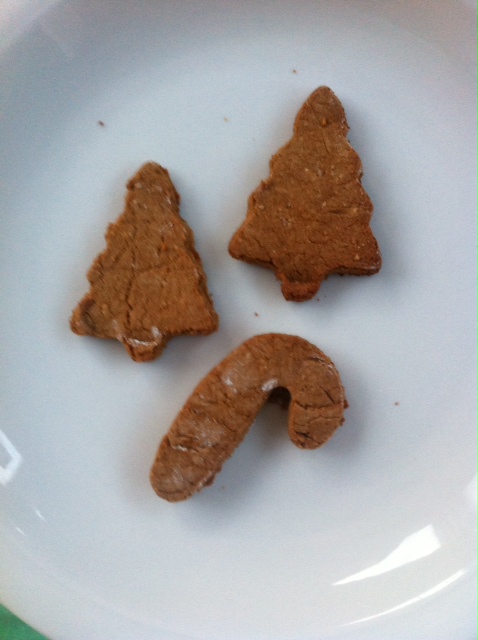
re is a recipe for Gingerbread Cookies that are gluten free and can be made paleo by using coconut oil and vegan by using flax instead of egg:

Ingredients:Ginger bread Cookie

  • 1/2  cup vegan margarine or coconut oil melted
  • 1/2 cup coconut palm sugar
  • 1/2 cup molasses
  • 3 eggs or 3 tbs ground flax seed boiled with 9 tbs of water
  • 1.5 cups coconut flour
  • 1 tsp baking soda
  • 1/2 tsp baking powder
  • 1/2 tsp ground ginger

Cream together the margarine or coconut oil, sugar and molasses; beat in the eggs or flax.  Sift together the dry ingredients and gradually mix with molasses mixture.  Roll out on lightly floured surface and cut with cookie cutters.  Bake at 350 for 10-15 minutes depending on the size of the cookies.  These cookies don’t have the lifespan of traditional gingerbread so eat them within a day or two.

Posted in Recipes, Uncategorized | Tagged , , , , , | Leave a comment

Healthy Eating in middle age… healthier aging in later age

Sardines Marinades amb verduretes

Sardines Marinades amb verduretes (Photo credit: Spanish Recipes)

Various studies have shown that a healthy Mediterranean diet may contribute to reduced fasting glucose concentrations and lipid levels in those at risk for diabetes, may lower the risk for cardiovascular events and stroke, and improve cognition. A new study involving 10,670 female nurses, published in the November 5 issue of Annals of Internal Medicine, indicates that middle-aged women following a healthy Mediterranean-type diet — with an emphasis on fruits, vegetables, whole grains and fish, moderate amounts of alcohol, and little red meat — have much greater chance of healthy aging later on.

“In this study, women with healthier dietary patterns at midlife were 40% more likely to survive to age 70 or over free of major chronic diseases and with no impairment in physical function, cognition or mental health,” said lead study author, Cécilia Samieri, PhD, Institut pour la Santé Publique et le Developpement, Université Bordeaux, France. (read more)

Posted in General Health | Tagged , , , , | Leave a comment

Quinoa is not a grain. It’s a seed!

Quinoa (Chenopodium quinoa) dans le jardin bot...

Quinoa (Chenopodium quinoa) dans le jardin botanique Henri-Gaussen, Toulouse, France (Photo credit: Wikipedia

by Julie Daniluk

Quinoa has become one of the most popular nutritional superstars of the decade. And with good reason! This small seed has an amazing nutty taste, is incredibly versatile, easy to prepare, high in nutrients and a complete vegetarian protein. Unfortunately the popularity of this food has lead to the time old problem of supply, demand and price. Not unlike other worldwide popular foods such as coffee and chocolate, quinoa has been traditionally grown in one specific region of the world. The increased demand has created a new and challenging environment for quinoa farmers. (read more)


Quinoa recipe

Posted in Nutrition | Tagged , , | Leave a comment

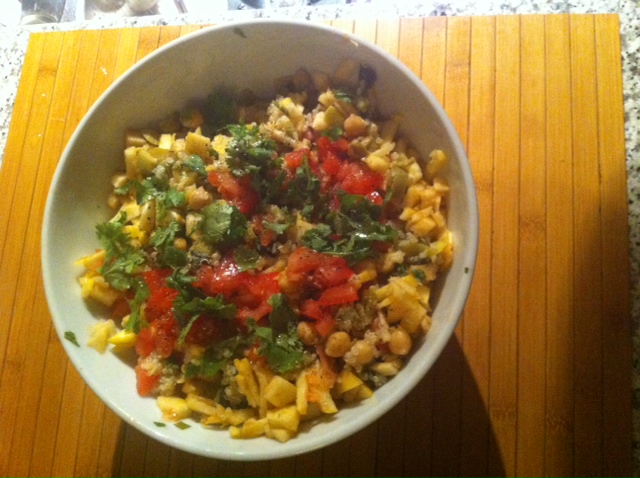
Quinoa apple salad


  • This is a fantastic recipe. Easy to make. Enjoy it. Quinoa apple saladQuinoa cooked with leek
  • Golden Delicious Apple (finely chopped)
  • Tomato (finely chopped)
  • cilantro
  • a can of chickpea
  • green olives (finely chopped)
  • you can add other fruits as well, such as peach
  • Lastly, add a little oil. Olive oil or hemp oil.
Posted in Recipes | Tagged , , , , | Leave a comment

Osteoarthritis Patients Now Twice as Likely to Survive Hip Replacement Surgery

English: Hip replacement using cementless impl...

English: Hip replacement using cementless implants. 16 days post-surgery. (Photo credit: Wikipedia)

A recent study has revealed that osteoarthritis patients  undergoing total hip replacement surgery are now twice as likely to survive within 90 days of surgery.

The study, published in The Lancet (September 2013) involved more than 400,000 cases who underwent hip replacement for osteoarthritis between April 2003 and December 2011 in Wales and England. Researchers identified 1,743 deaths: a 90-day mortality rate that fell from 0.56% in 2003 to 0.29% in 2011.

Several clinical factors were associated with lower mortality after adjusting for sex, age group, and comorbidity, including:

    • The method of surgical approach
    • Specific treatments to stop blood clots after surgery
    • Pre-surgical fitness
    • Post surgical Rehab
    • Spinal anesthetic

In addition, the researchers found that the type of prosthesis showed no association with mortality. However, poor health was associated with a significant increased risk of death.

  • Moderate or severe liver disease associated with a nearly 10-fold greater risk for 90-day mortality
  • Metastatic cancer was associated with 7-fold increased mortality
  • Heart Attack, congestive heart failure, and diabetes were all associated with 2 and 3 times increased mortality
Posted in Orthopaedics, Uncategorized | Tagged , , , , , , , | Leave a comment

Acupuncture for Recurring Depression

Depression

Depression (Photo credit: Wikipedia)

It is estimated that 1 in 20 Canadians report some form of depression every year, which makes it Canada’s fastest-rising diagnosis.  In the United Kingdom, it is the third most common reason for primary care consultation, meanwhile up to 60% of patients have an inadequate response to antidepressants, and 30% do not adhere to their medication regimen. Therefore it becomes important to explore nonpharmacologic treatment options. Although acupuncture is frequently used for the treatment of depression by acupuncturists, it is rarely used in mainstream medicine.

A randomized controlled trial of acupuncture and counseling showed that both treatments demonstrated a statistically significant symptom reduction at 3 months. This study involved 755 patients with recurring bouts of moderate to severe depression.

“To our knowledge, our study is the first to rigorously evaluate the clinical and economic impact of acupuncture and counselling for patients in primary care who are representative of those who continue to experience depression in primary care,” the authors write.

A cost-effectiveness analysis of the treatments was also conducted, the results of which will be published in a separate article.

Published online September 24, 2013. Full article

Posted in Mental Health | Tagged , , , , | Leave a comment

10 Ways to Protect Your Child’s Spine From Heavy School Backpacks

Every fall, I get asked by concerned parents about how school bags can affect their children’s spines. Research clearly shows that there is an association between heavy backpacks and risk of back pain in children. A study involving 1,403 school children between the age of 12-17 showed that those carrying the heaviest backpacks had a 50% higher risk of back pain. Other  studies have highlighted the risks of heavier backpacks, English: Outdoor backpack Deutsch: Outdoor-Ruc...especially when weights exceed 20% of the child’s body weight. Another Australian study confirmed that neck pain among adolescents is as common as back pain. Children assume a compensatory forward head posture under backpack loads greater than 10-15% of their body weight. A poorly worn backpack can change posture and gait when walking, which will set a weak foundation for the body frame. It has been shown that adolescents diagnosed with back pain are much more likely to have chronic back pain and injuries as adults.

Here are some uniquely designed backpack

  • by IVAR, which uses a Shelf System design.

So here are 10 practical tips for preventing back pain from carrying schoolbags:

  1. Reduce the weight to 10-15% of the child’s body weight
  2. Reduce the duration of time wearing the backpack
  3. Place heavy items so that they are closest to the child’s back and make sure they can’t move around (or one with shelf system design)
  4. The bags should have wide, padded and adjustable shoulder strapsback_pack_safety_t580
  5. Lightweight design is ideal
  6. Use the compression straps at the sides of the bag to bring the load together
  7. Use the waist strap and chest strap to bring the load closer to child’s back
  8. Backpacks should not be wider or longer than the child’s torso (maybe adjustable)
  9. Don’t carry the backpack low on the back
  10. Show your child the correct way to put on the backpack and wear it properly


Posted in Pediatrics | Tagged , , , , , , , , , , | 1 Comment

“Junk food” is linked to anxiety and depression even in very young children

Corporate Sponsorship

Corporate Sponsorship (Photo credit: Peter Blanchard)

“Junk food” during pregnancy and in early childhood is linked to a significantly increased risk for poor mental health, including anxiety and depression, in very young children, new research shows.

A large, prospective study included 23,020 women and their children showed that higher intakes of unhealthy food during pregnancy, as well as a lack of healthy food in children during the first years of life, were linked to higher levels of behavioral and emotional problems, such as tantrums and aggression, more of “externalizing” behaviors as well as increased “internalizing” behaviors, indicative of depression and anxiety.

On the basis of these data, women were categorized into 2 major dietary patterns — a “healthy” pattern, characterized by high intake of vegetables, fruit, high-fiber cereals, and vegetable oils, and an “unhealthy” pattern, characterized by a high intake of processed meat products, refined cereals, sweet drinks, and salty snacks.

“Both an increased intake of unhealthy foods and a decreased intake of nutrient-rich foods in early childhood were independently related to higher internalizing and externalizing behaviors in young children. These behaviors are established early markers for later mental health problems,” the researchers write. (read more…)

Posted in Pediatrics | Tagged , , , , , , , , , , , , , | Leave a comment

Spinning and Knee Pain

Recently, a patient came to me regarding knee pain. She is an avid spinner, so she asked if the knee pain could be the result.  My knowledge of spinning or cycling is limited, but one thing I know is that the set-up of a bike must be appropriate for each person, otherwise no treatment will help in the long run. My friends Clair and Ursula from C.O.R.E cycling know plenty about cycling and spinning. Here are a few tips from them.

Correct bike fit, is the single most important element of a successful and injury free spin class for today and for the rest of your cycling days – which will be many – if you know how to set yourself up.

Saddle Height

As a general guideline, adjust the saddle so that it’s at hip height. This is just an spinning2approximation. Sitting on the bike is where we get accurate. Rotate one pedal (flat foot) all the way down to the bottom of the pedal stroke (with hands on handlebars), you should have only about a 25 degree bend at the knee. It’s not that much. If in doubt, adjust your saddle a little higher, pedal a few rotations and notice if your hips rock back and forth. If so, you’re too high, drop the saddle (just a little) until the hips stabilize. Riding with a saddle that’s too high may result in pain in the hip and/or lower back as well as behind the knee. If the saddle is too low, the resulting pain is in the front of the knee caused from  excessive forward torque.

Saddle Fore/Aft

This measurement relates to how close or how far the saddle is to the handlebars. It’s all about your knee. Rotate one pedal to 3:00 (if your full pedal stroke were a clock face), so that both crank arms are parallel to the ground. Ensure that your foot is flat. Imagine a spinning1plumb line inserted at the patellar tendon (or the small indent just below the knee cap) would fall at the pedal axle (where the pedal and the crank arm meet). If your knee is ahead of the pedal axle, you will exert too much pressure on the knee, leading to pain in the front of the knee. If the knee is behind the pedal axle, hip, lower back or behind the knee pain could result from over-reaching during the pedal rotation.

Important Note: If you’ve made adjustments to either saddle height or saddle fore/aft, you will need to re-check the former. In other words, by either dropping the saddle down or moving the saddle forward, you have shortened the reach for the pedal. Conversely by raising the saddle or moving it back, you have lengthened the reach for the pedal.

Handlebar Height:Handlebars should be raised until a soft bend in the elbow is achieved. This ensures that the rider isn’t putting too much pressure on the trapezius. New riders or participants with back issues should have their bars raised until they are comfortable and not putting pressure on the hands. Many of the newer spin bikes have cockpits with both height and fore/aft adjustments for better upper body positioning.

Saddle Tilt: Ever feel like you’re sliding forward on that saddle? Hands numb from the pressure of holding yourself up? This is a result of your saddle tilt. Most female riders will want a saddle with a very slight upward tilt at the nose, (too much and perineal pressure will be excruciating.) New (female) participants will feel much better on a saddle with a bit of an upward tilt. Speak to your bike mechanic about changing the angle of the nose to tilt up ever so slightly.

5,000 Rotations

Think just one class with a bad set up won’t make a difference? Think again. Each 60 minute spin class has you rotating one leg (an average of) 5,000 times!

C.O.R.E Cycling Indoor Cycling Instructor Certification                                        http://www.corecycling.ca

Posted in Musculoskeletal | Tagged , , , , , , , , , , | 2 Comments

High Glycemic Index Food Alters Brain Activity

(Week 15) Day 99/366 - Heritage - American her...A new research published in Am J Clin Nutr. June 26, 2013 found that consumption of a high glycemic index (GI) meal found in refined carbohydrates increased hunger and selectively stimulated brain regions related to craving and reward 4 hours after eating — a critical time point that influences eating behavior at the next meal. This finding supports the controversial hypothesis of food addiction.

The study showed that refined carbohydrates can have biological effects on people with symptoms similar to addiction, independent of calories and tastiness according to the study’s principal investigator, David Ludwig, MD, from Boston Children’s Hospital.

Participants were given either a low-GI meal (slow-acting carbohydrate) or a high-GI meal (fast-acting carbohydrate). The participants underwent a final blood glucose test and neuroimaging, and rated their hunger levels 4 hours after the meal.

Participants consumed high GI meal reported excessive hunger 4 hours later. They also initially had a surge in blood glucose level that was 2.4-fold higher than the low-GI meal participants, followed by a crash in blood glucose at 4 hours. Functional magnetic resonance imaging (fMRI) showed intense activation in the area of brain related to addiction in every single participant with high GI meal.

The results show that highly processed carbohydrates, such as white bread, potatoes, and concentrated sugar, “alter brain activity in ways that make us crave them even more,” Dr. Ludwig said. (read more)

Posted in Nutrition | Tagged , , , , , , , , | 1 Comment